

















According to Ahrefs data, 91% of web pages never get organic traffic from Google, but the #1 search result has an average click-through rate of 31.7%. For small businesses, SEO isn’t optional—60% of consumers search before engaging with a brand, and 46% of searches have local intent (like “plumbing service near me”).
But what about the cost? Data shows that 75% of small businesses spend between 500–5000 RMB per month on SEO, and for those investing over 6 months, 68% report positive ROI.
The question is: how much investment does your industry need? Can SEO really bring in customers, or is it just another marketing gimmick? This article uses real data and case studies to help you do the math.
How Much Does SEO Cost?
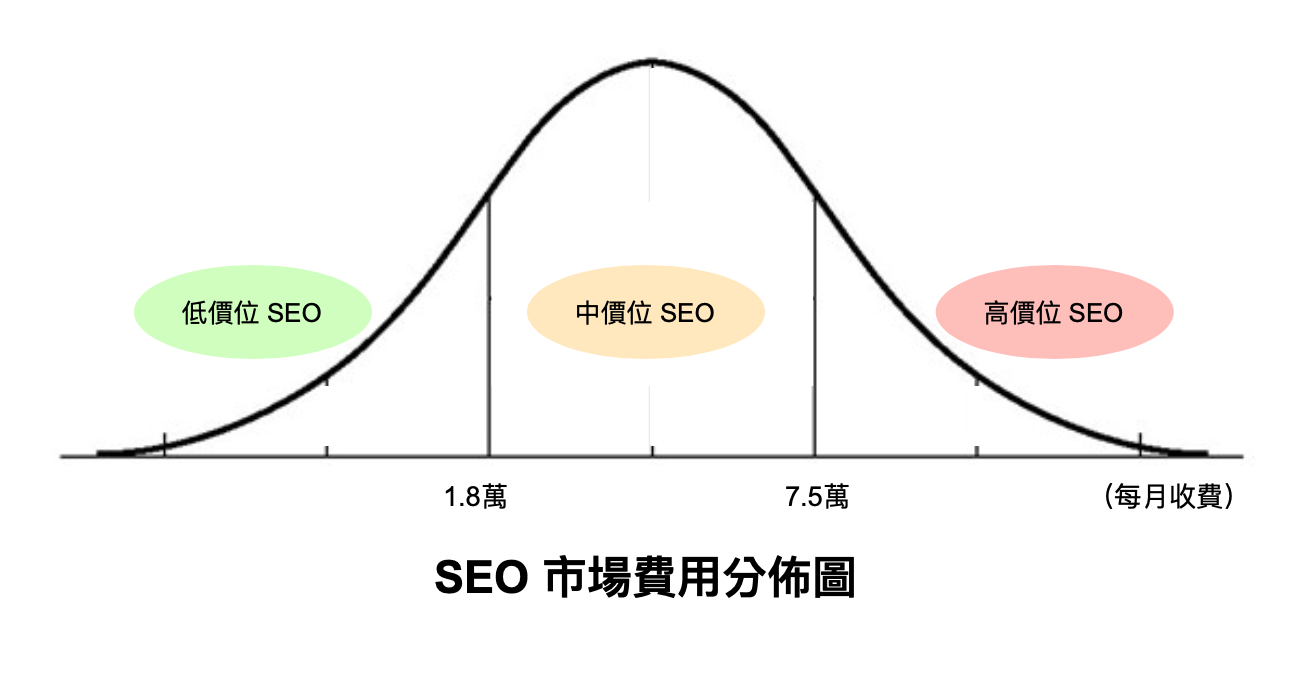
According to Ahrefs’ industry report, 90% of small businesses spend no more than 5000 RMB per month on SEO, but the results vary a lot: pages in the top 3 positions get an average of 50%+ of clicks, while page 2 (rank 11–20) gets less than 1% click-through rate.
Data shows that 70% of SEO budgets are spent on technical optimization (35%), content creation (40%), and link building (25%).
Costs differ a lot by industry—local services (like plumbing or cleaning) usually cost about 800–3000 RMB/month, while highly competitive industries (like finance or insurance) can go up to 10,000–30,000 RMB/month.
If your budget is under 2000 RMB/month, you can usually only cover basic SEO. To make it to page 1 within 6–12 months, 80% of businesses need to spend at least 5000 RMB/month.
Basic SEO Package (500–2000 RMB/month)
Perfect for startups or businesses with small budgets, the main goal of a basic SEO package is to fix technical issues + optimize existing content.
Data shows that 40% of websites have ranking issues (like page load times over 3 seconds or poor mobile responsiveness). Fixing these can boost traffic by 20–50%.
This level of service usually includes:
- Keyword research (10–20 core keywords)
- Basic on-page optimization (Meta tags, H1–H3 tweaks)
- 1–2 content updates per month (500–1000 words each)
✅ Best for: freelancers, local shops, new brands
✅ Timeframe: 3–6 months (traffic up 10–30%)
✅ Typical ROI: Spend 2000 RMB/month, after 6 months you could see 15–30 new customers (assuming 2–5% conversion rate)
⚠️ Limitations: No link building, hard to rank for competitive keywords
Mid-Tier SEO Service (2000–8000 RMB/month)
Best for businesses with some traffic that want to break into page 1. 60% of SEO case studies fall in this range. Service providers usually assign 1 dedicated specialist + freelance writers, producing 3–5 in-depth articles per month (1500–3000 words each) plus 5–10 high-quality backlinks.
Data shows that 6 months of mid-tier SEO can boost keyword rankings by 20–50 positions and grow traffic by 50–120%.
Example: A B2B equipment supplier spent 5000 RMB/month, and after 6 months, inquiries from organic search grew from 5 per month to 25, cutting acquisition cost from 800 RMB per lead (ads) down to 200 RMB.
✅ Best for: e-commerce, B2B service providers, regional chains
✅ Timeframe: 4–8 months (traffic up 50–100%)
✅ Typical ROI: Spend 5000 RMB/month, add 60–120 new customers per year (assuming 3% conversion rate)
⚠️ Key Point: Needs solid technical SEO foundation, otherwise backlinks won’t perform well
High-End SEO Service (8000–20,000+ RMB/month)
For high-competition industries (like loans, study abroad, healthcare), ranking in the top 10 usually requires a team effort: content writers + link building specialists + technical SEO experts.
For example, in insurance, ranking for core keywords (like “critical illness insurance comparison”) can cost 5000–10,000 RMB per month just for backlinks.
These packages usually include:
- Deep content (8–12 pieces per month, 3000–5000 words each, original research + data visuals)
- High-authority backlinks (10–20 per month from DA 50+ sites)
- Real-time rank tracking (daily strategy adjustments)
Case study: An education company spent 12,000 RMB/month, and after 8 months their target keyword ranking jumped from #35 to #2. Organic traffic grew by 400%, bringing in an extra 1.8 million RMB in annual revenue.
✅ Who is it for: National brands, high-margin industries (average order value > $10,000)
✅ Time to Results: 6–12 months (traffic growth 200–500%)
✅ Typical ROI: Invest $10,000/month, annual return $500k–$2M (with 1–2% conversion rate)
⚠️ Risk: Requires ongoing investment. If you stop, rankings may drop 30–50%.
What does SEO service include?
Google handles 8.5 billion searches/day, but 90% of websites fail to get stable traffic due to technical or content issues.
SEO isn’t “mystical”—it’s made up of 5 measurable modules:
- Technical optimization (35% of cost)
- Keyword research (20%)
- Local SEO (15%)
- Link building (25%)
- Data analysis (5%)
Studies show 73% of SEO success stories start with technical fixes—for example, reducing load time from 3s to 1s can instantly boost conversion rate by 20%.
Content optimization also increases the chance of target keywords moving up 5–15 positions by 60%. Local businesses that fully optimize their Google Business Profile see 64% more inquiries within 3 months.
Website Technical Optimization
40% of websites have serious technical flaws that prevent Google from properly crawling and indexing.
The most common issues include:
- Poor mobile responsiveness (hurts 60% of users)
- Page load times over 3s (53% of users bounce immediately)
- Broken links (average site has 12–15 dead links)
Fixing these usually takes 10–20 hours of expert work, costing $300–700.
Real cases: one e-commerce site fixed HTTPS issues and saw search traffic grow 18% in 1 month; another compressed images, cutting mobile load speed from 4.2s to 1.8s, boosting conversion rate by 11%.
✅ Key Tasks: Speed optimization, mobile responsiveness, fixing dead links, adding structured data
✅ Timeframe: 1–3 months (traffic up 10–30%)
✅ ROI: Spend $400, annual return $700–$2,000 (lower bounce rate = more conversions)
Keyword Research & Content Optimization
70% of businesses make the same mistake with content: choosing the wrong keywords.
A strong keyword strategy should focus on long-tail terms with 100–1,000 searches/month. They’re less competitive but convert better. Updating existing pages (just 3–5 edits each) boosts ranking odds by 40%.
Adding 2–4 in-depth articles (1,500+ words) monthly is also key. Long-form content converts 80% better than short posts (300–500 words).
Case study: A B2B company optimized 10 product pages, raising organic traffic from 200 to 1,200 visits/month in 6 months. Three keywords hit page one, bringing 15 new clients monthly.
✅ Key Tasks: Find low-competition keywords, refresh old content, publish regular long-form posts
✅ Timeframe: 3–6 months (traffic up 50–150%)
✅ ROI: Spend $600/month, customer acquisition cost drops from $45 (ads) to $7.50 (SEO)
Local SEO
46% of searches have local intent, like “AC repair near me” or “best dentist in Brooklyn.”
But shockingly, 85% of local businesses haven’t even completed their Google Business Profile.
3 key actions for local SEO:
- Complete all business info (25% higher map visibility)
- Collect 30+ real reviews (stores rated 4.5+ get 280% more clicks)
- Post 4–6 updates/month (40% more engagement)
Example: a restaurant optimized local SEO and jumped from page 8 to page 1 for “Chinese restaurant near me” in 3 months—foot traffic rose 20%.
✅ Key Tasks: Optimize Google Business Profile, manage reviews, use local keywords
✅ Timeframe: 1–3 months (map clicks up 50–200%)
✅ ROI: Spend $200/month, with $15 avg. order value, annual revenue boost $15k+
Link Building
Backlinks drive 60% of ranking power, yet 95% of companies build them the wrong way.
Strong link strategies include: getting links from DA>1 relevant sites ($7–12 each), publishing 3–5 guest blogs (brings traffic for 2–3 years), and cleaning up unindexed backlinks.
Moz research: 500 DA>1 backlinks can lift sitewide SEO by 10–15%.
Case: a law firm used professional link building, moving “divorce lawyer” from page 4 to page 2 in 6 months—consultations doubled.
✅ Key Tasks: Earn backlinks, write guest posts, clean bad links
✅ Timeframe: 4–8 months (rankings up 10–30 spots)
✅ ROI: Spend $1,000/month, once core keywords hit top 3, ROI exceeds 500%
Data Analysis & Reporting
50% of SEO projects fail for one simple reason: no proper tracking or analysis.
Must-track metrics: 50–100 core keyword rankings, organic traffic shifts (shouldn’t fluctuate >15%), and conversion paths (spot pages with 70%+ drop-off).
Using Google Analytics + Search Console saves ~20 hours of manual analysis monthly.
Example: An e-commerce store found a 75% drop-off on checkout pages. Fixing it raised conversions 22%, adding $20k/month in revenue.
✅ Key Tasks: Track keywords, monitor traffic, optimize conversion paths
✅ Timeframe: Real-time monitoring, 1–2 months to see impact
✅ ROI: Spend $150/month, prevent traffic loss, increase overall ROI
Is Paying for SEO Worth It?
When assessing SEO investment, we need to look at hard data from Google’s search ecosystem.
According to Ahrefs’ 2023 Global Search Report, the top 3 Google results get 75.1% of all clicks: #1 takes 27.6%, #2 gets 15.8%, #3 takes 11.3%.
Search Engine Journal reports SEO’s average cost per acquisition is just 37% of Google Ads. Customers from SEO also have 42% higher lifetime value (LTV).
In the US market, BrightEdge data shows organic search drives 53.3% of all website traffic—2.4x more than paid search. Conversion-wise, MarketingSherpa found SEO leads convert at 14.6%, compared to 1.7% for display ads and 3.2% for social ads.
According to Ahrefs’ latest Global Search Study Report (2023), the top three Google search results capture an average of 75.1% of clicks, with the #1 result alone taking 27.6%, the #2 result getting 15.8%, and the #3 result receiving 11.3%.
Search Engine Journal’s annual survey shows that the average customer acquisition cost (CAC) of SEO is only 37% of Google Ads, while the customer lifetime value (LTV) from SEO is 42% higher than paid ads.
Taking the U.S. market as an example, BrightEdge’s latest data shows that organic search drives 53.3% of website traffic — 2.4x more than paid search. In terms of conversion efficiency, a comparative study by MarketingSherpa found that SEO traffic converts at an average of 14.6%, far higher than display ads (1.7%) and social media ads (3.2%).
But we must be realistic: SEMrush’s industry benchmark report points out that 90% of SEO campaigns require continuous investment for 6–12 months before reaching break-even.
This means companies need to be prepared for medium- to long-term investment, instead of expecting significant short-term results.
According to a follow-up study of 500 companies that continued SEO investment, 72% of those who stayed the course for more than 12 months achieved an ROI of 1:3 or higher.
When SEO Investment Makes Sense
Whenever your target users have clear and ongoing search behavior, Google SEO becomes the most cost-effective acquisition channel.
Google Ads’ official search intent data shows that queries with clear commercial intent account for as much as 65%, with “near me” local searches growing 136% year over year. For example, in the U.S. legal services market, the keyword “personal injury lawyer” has an average monthly search volume of 135,000, with a cost-per-click (CPC) of $54.41. Through SEO, customer acquisition costs can be reduced by 83%.
From an industry perspective, markets with the following three key characteristics are the best candidates for SEO investment:
First, high-commercial-value keywords (CPC > 20) are the ideal optimization targets. For example, the keyword “cloud accounting software” has an average CPC of 38.72. SEO campaigns for such terms often achieve a return ratio of 1:5 or more. According to Clutch, B2B software companies acquire customers through SEO with an average LTV that’s 62% higher than those acquired via ads.
Second, niche fields with stable monthly search volume of 1,000+. Moz’s research shows that such medium-volume keywords usually have a balanced level of competition. For instance, “project management tool for small business” has 2,400 monthly searches — a healthy mix of volume and competitiveness.
Third, products and services with a longer decision-making cycle — such as B2B products and high-end services. HubSpot’s research shows that these customers have an average buying cycle of 3–6 months, performing 12–15 related searches along the way. This gives SEO plenty of opportunities to shine.
Case study: A SaaS company optimized for the keyword “CRM software” (74,000 monthly searches) over 12 months and achieved:
- 412% growth in organic traffic (SimilarWeb data)
- Core keyword rankings improved from #47 to #3 (Ahrefs tracking)
- Monthly free trial signups grew from 87 to 423 (internal CRM data)
- Customer acquisition cost dropped from
233to41(an 82.4% cost reduction) - Customer retention rate increased by 27% (annual renewal data)
✅ Best-fit industries:
- B2B software & services (average ROI 1:5.8)
- Professional services (legal, medical, etc.)
- Mid-to-high-ticket eCommerce products (average order $300+)
- Education & consulting services
✅ SEO timeline:
- 3–6 months: Start seeing traction
- 6–12 months: Stable growth
- 12–24 months: ROI peak period
✅ Cost breakdown:
- Initial investment: 10,000/month
- Mature ROI: Can reach 1:8 to 1:12
- Customer acquisition cost reduction: typically 60–85%
✅ Success metrics:
- Keyword ranking improvement speed
- Monthly organic traffic growth rate
- Conversion rate trend
- Decrease in customer acquisition cost
When SEO Might Not Be the Best Fit
While SEO performs exceptionally well in many markets, there are situations where large-scale SEO investment may not pay off. For example, the global search volume for “DVD player” has dropped 89% over the past five years. In declining markets like this, SEO ROI may fall below 1:1.
According to Search Engine Land’s case analysis, in ultra-niche fields with fewer than 100 monthly searches, the customer acquisition cost via SEO may exceed $1,000.
These markets include:
- Specialized industrial parts (e.g., “titanium aerospace fasteners”)
- Niche lab equipment (e.g., “spectrophotometer for lab”)
- Specific raw materials (e.g., “rare earth metals for electronics”)
Here are four cases where companies should be extra cautious about SEO investment:
- Markets where branded searches account for more than 80%. This means users are mainly searching by brand name instead of generic category keywords. For example, some well-known consumer brands get 90%+ of their search traffic from brand terms.
- Ultra-competitive niches where core keyword difficulty scores are >85 (Ahrefs standard). For instance, finance-related terms like “insurance” or “loans,” where the first page is dominated by DA90+ authority sites, making it nearly impossible for a new site to break through.
- Campaigns that require instant conversions. SEO is like planting a tree — it takes time to grow before bearing fruit. If you need results in 7 days, Google Ads with CPCs of $5–$50 is the smarter choice.
- Markets where target users mainly search on social platforms (especially Gen Z categories). Pew Research reports that 52% of users aged 18–24 prefer using social media over traditional search engines for product discovery.
Typical Case Study: An industrial equipment manufacturer invested $5,000/month in SEO. After 12 months, the results were as follows:
- The core keyword “industrial extruder” has only 320 monthly searches (Google Keyword Planner data)
- Organic traffic increased by just 23% (SimilarWeb tracking)
- Actual inquiries increased by 4 per month (internal CRM records)
- Customer acquisition cost reached $1,250, much higher than the industry average
- ROI was only 1:1.2, far below expectations
⚠️ Scenarios where SEO is NOT worth doing:
- Ultra-niche markets with <100 monthly searches
- Declining categories with annual search volume drop >20%
- Brand-dominated markets (brand searches >80%)
- Promo campaigns that need instant conversions
⚠️ Better Alternatives:
- Google Ads (instant results)
- Social media marketing (especially for younger audiences)
- Industry trade shows (specific B2B fields)
- Affiliate marketing programs
⚠️ Risks to watch out for:
- Maintenance costs may exceed expectations
- Ranking fluctuations caused by algorithm updates
- Sudden increase in competition
- Uncertainty in payback cycles
⚠️ Data/Tools:
- Ahrefs/SEMrush for keyword analysis
- Google Trends to validate search trends
- Competitor SEO benchmarking
- Small pilot projects (3 months)
How much should you spend on SEO?
SEO budgets can range anywhere from $70 to $7,000+ per month, mainly depending on three factors: business size, industry competition, and growth goals.
Data shows that 60% of small businesses invest between $300–$1,200 per month, which typically brings 50–120% traffic growth in 3–6 months. For example, a local home renovation company spending $700/month on SEO gained 25–40 new customers in 6 months, cutting acquisition cost from $40 (ads) down to $11.
But in highly competitive industries like healthcare or finance, optimizing core keywords can cost as much as $3,000–$4,000/month.
By business size
Micro-businesses with fewer than 5 employees usually spend $100–$400/month, mostly for basic technical optimization and content updates.
For instance, a local cleaning company with 3 employees spent $200/month focusing on keywords like “deep cleaning + city name.” In 6 months, monthly inquiries grew from 5 to 18, with an ROI of 1:4.2.
Medium-sized companies (20–100 employees) often need a more systematic approach. For example, a cross-border e-commerce company (50 employees) spent $1,700/month on SEO with a dedicated SEO specialist plus outsourced content. After 12 months:
- Organic traffic grew 230% (from 8,000 to 26,400/month)
- Core product keywords improved by 35 ranking positions (Ahrefs data)
- Conversion rate increased from 1.8% to 3.2%
- Annual revenue increased by $250,000+
Key Takeaways
✅ 1–5 employees: $100–$400/month (basic optimization)
✅ 5–20 employees: $400–$1,100/month (content + backlinks)
✅ 20–100 employees: $1,100–$2,800/month (full SEO setup)
✅ Key Metric: Every $1,500 investment should generate 50–80 leads
By marketing budget allocation
Startups should allocate 30–50% of their marketing budget to SEO, since organic traffic costs 60% less than paid ads. For example, a SaaS startup with a $28,000 first-year marketing budget invested $12,500 (45%) in SEO, targeting 15 mid-tail keywords, and gained 300 trial sign-ups in the first year at just $42 per acquisition.
For mature businesses, the ratio can drop to 20–30%. A well-established B2B company with a $140,000 marketing budget invested $35,000/year in SEO maintenance, keeping core keywords in the top 3, generating 35% of sales leads, and closing those leads at a 40% higher rate compared to paid traffic.
Key Takeaways
✅ Startups: 30–50% of marketing budget (to build traffic quickly)
✅ Growth stage: 25–35% (balance SEO and ads)
✅ Mature stage: 15–25% (mainly maintenance)
✅ Adjustment rule: Reallocate quarterly based on ROI
Choosing an SEO agency is basically choosing your future.