



















2025 Google global search traffic shows that mobile accounts for 72%, up 5% from 2023, with local services, e-commerce, and short-form content consumption contributing most of the growth. However, desktop has not declined, still holding 28% share, especially dominant in B2B procurement (61%), financial consulting (53%), and software tools (49%).
The average search query length on mobile is 32% shorter than on desktop, voice search share has risen to 18%, while desktop users prefer long-tail keywords (4+ word queries are 41% higher) and multi-page deep browsing.
SEO strategies must be tailored—mobile optimization focuses on loading speed (1-second delay reduces bounce rate by 53%) and localization, while desktop relies on in-depth content and structured data to boost rankings.
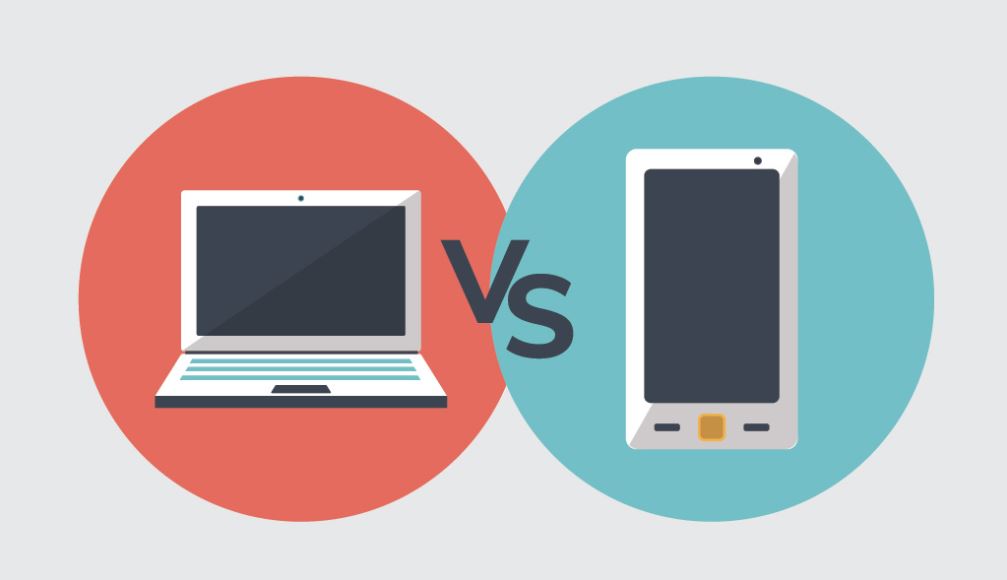
Who Dominates
Mobile share reached 72.3%, up 5.2 percentage points from 2023, with daily searches surpassing 3.8 billion. But desktop still firmly controls high-value areas, maintaining an edge in B2B procurement (61%), financial consulting (53%), etc.
Data shows that mobile users spend only 17 seconds per search on average, while desktop users stay for 2 minutes 48 seconds, with a conversion rate 2.1 times higher.
Mobile CPC averages $0.78, while desktop reaches $1.32.
2025 Mobile Search Share Data
By device type, smartphones contributed 95.7% of mobile traffic, tablets only 4.3%, down 41% from 2023. By time distribution, morning peak (7-9am) mobile search share reached 82%, far exceeding desktop’s 18%. Regionally, emerging markets saw mobile search penetration exceed 85%, with India and Indonesia growing fastest at 28% and 31% annually.
Technically, mobile search is extremely sensitive to speed. For pages loading within 1 second, bounce rate is just 19%, while for 3-second loads it soars to 53%. Voice search share rose from 20% in 2023 to 25%, with local service queries (e.g., “gas station nearby”) making up 47% of all voice searches. Notably, smartphones with screens over 6 inches have 39% higher conversion rates than smaller ones, with average order value reaching $88.
Mobile search shows obvious “fragmented” patterns, with 75% of searches happening on the move, 48% during commuting hours. But conversion rate is only 1.8%, far below desktop’s 3.9%.
Industries with Fastest Mobile Search Growth
Local lifestyle services grew 83%, with “24-hour locksmith” searches up 122%.
Food delivery performed strongly, with “30-minute delivery” searches up 97%, pushing average CPC for delivery platforms from $0.85 to $1.45.
In fast fashion, 63% of searches began via social media image recognition, with brands like Zara leveraging AR try-on to boost conversions by 28%.
Healthcare showed explosive growth. Symptom checker searches reached 1.4 billion/month, with drug price comparison searches up 81%.
Notably, users aged 18-34 contributed 88% of mobile health searches, preferring voice queries (37%). In B2B, “industrial parts next-day delivery” searches surged 94%, reflecting rising mobile procurement needs.
Mobile ad costs continue to climb, with local service keywords CPC at $1.78, up 109% from 2023. But ROI is significant, with every $1 spent generating $4.7 in returns.
Desktop Search Still Strong
In enterprise procurement, 88% of software quote searches come from desktop, with users browsing 7.2 pages before deciding. In finance, 70% of “retirement planning” searches occur on desktop, with average session length of 11 minutes, 3.1x mobile. In professional services, 83% of legal queries are on desktop, with “workers’ compensation calculator” page visits up 67%.
College students spend 87% of their research time on desktop, viewing an average of 4.3 academic papers per search.
In high-end goods, desktop conversion rate is only 2.3%, but order value reaches $214, 2.8x mobile. Users aged 55+ contribute 21% of desktop traffic, up 5 points from 2023.
Desktop search shows “in-depth” patterns, with 41% of queries containing 5+ keywords. These long-tail searches convert 3.2x better than short-tail. In content marketing, long guides over 2000 words get 3.4 shares on average, 5.7x mobile content.
User Behavior Differences
Data shows mobile users spend just 17 seconds per search, while desktop users average 2 minutes 48 seconds, 9.8x longer. On content, 87% of mobile queries have 3 words or fewer, while 41% of desktop searches use 5+ keywords.
89% of mobile searches occur within 5km of users’ location, versus 32% on desktop. Desktop conversion rate (3.9%) is 2.2x mobile (1.8%), but mobile contributes 72% of instant transactions.
Mobile Search Characteristics
Mobile search shows “fragmented + instant” traits. Users conduct 8.7 searches per day on average, with 62% outdoors. Peak is commuting hours (7-9am, 48%), with instant queries like “near me” and “now” making up 67%.
Voice search rose to 25%, reaching 63% while driving. Input method: 53% use autocomplete suggestions, only 29% type full queries.
Interaction-wise, mobile users show “scrolling preference.” Avg SERP depth is 1.8 screens, with 82% of clicks on first screen.
Video completion rate is 41%, but vertical videos perform 28% better. Speed is critical—pages loading in 1s convert 53% better than 3s pages, with 61% lower bounce.
Mobile shows “screen size effect.” Large phones (6.5+ inches) have 47% higher ad CTR, 1.2 more screens of product page depth, and 33% lower cart abandonment. Small screens lead in voice search by 12 points.
Desktop Search Characteristics
Desktop shows “research-heavy” patterns. Users view 7.2 pages per search, spending 11m24s, 9.8x mobile. In content, 83% fully read pages, with PDF views averaging 6m12s. Multitasking is common, with 78% of searches alongside other apps, and 4.3 tabs open.
Searches are more specialized. B2B queries average 5.7 keywords, with 61% using operators (e.g., “|” or “+”). Finance is more so, with 70% including technical terms, users comparing 4.7 products on average.
92% of tech searches view past page 3, with code queries median dwell time of 8m47s.
Desktop users show a “workday effect.” Enterprise account searches are 3.8x higher on weekdays, with 31% between 10-11am. Personal searches are opposite, with 7-9pm traffic 2.4x work hours.
Click-Through Rates Across Devices
Device type heavily affects CTR. Desktop overall CTR is 3.2%, 1.9x mobile’s 1.7%. But ads perform better on mobile: search ad CTR is 2.3%, 0.7 points higher than desktop.
Mobile local business listings CTR is 4.5%, vs desktop’s 2.1%.
Content type matters too. On mobile, video thumbnails get 41% higher CTR than images, while on desktop the gap shrinks to 12%. List content CTR is 2.8% on mobile, dropping to 1.9% on desktop; while tables get 3.7% on desktop vs 1.2% mobile. By time, mobile CTR at night is 23% higher than daytime, while desktop stays steady.
CTR gap is widest for Q&A. Mobile FAQ CTR is only 1.1%, desktop 3.4%. But mobile chat entry CTR is 4.8%, vs desktop’s 2.1%. Price display matters too—on mobile, first-screen pricing boosts CTR 37%, desktop only 15%.
SEO Optimization Recommendations
In 2025, mobile holds 72.3% of traffic, but desktop delivers 56% of high-value conversions (AOV $114 vs mobile $76). Data shows mobile pages loading within 1s convert 53% better, while desktop long-form (2000+ words) content is shared 5.7x more. Cross-device users (31%) spend $1,287 annually, 3x mobile-only.
Optimization must be device-specific: mobile for speed (LCP<1.2s), desktop for depth (3+ internal links), linked with structured data.
Mobile Optimization Focus
Pages loading over 3s see bounce soar to 53%. Key optimizations:
- Image compression: WebP saves 42% vs JPEG, improving LCP by 0.8s
- Above-the-fold priority: keep first-screen HTML <14KB, boosting retention 28%
- AMP adaptation: news AMP CTR at 4.3%, 1.7x higher than normal
Interaction optimization:
- Buttons >48×48px, reducing misclicks by 33%
- Voice search FAQ (25% of mobile traffic) should use <50-word answers, CTR +29%
- Local keywords (e.g., “AC repair in Chaoyang Beijing”) make up 47%, must be front-loaded in Title/H1
Mobile ad CTR below fold is only 0.9%, but first-screen CTR is 2.8%.
Desktop Optimization Focus
Desktop users view 7.2 pages/session. Strategies:
- Layered long content: 2500-word guides split into 5-7 sections increase completion 41%
- Data visualization: pages with charts shared 83% more (e.g., “2025 GDP comparison”)
- Internal linking: 3-5 links per article extend dwell time 1.8x
Technical optimization:
- Use Schema for Q&A/tables, boosting rich snippet CTR to 3.4% (vs 1.1% plain text)
- B2B content should offer PDF downloads, lifting conversions 14%
- With 78% multi-tab users, fix core navigation in sidebar
Desktop right-side ad CTR (3.1%) is 29% higher than top (2.4%), but brand recall 17% lower.
Balancing Both for Omnichannel Growth
Cross-device strategy:
- Content adaptation: mobile <800-word summary + video, desktop 2000+ words + charts
- CTA design: mobile “one-click call” (+68% conversions), desktop “online consult” (+42% leads)
- Unified URL: avoid m.domain, use responsive design for consolidated SEO
Data integration:
- Users take 2.1 days from mobile search to desktop purchase; track via cookies/accounts
- Cross-device ads ROAS 1:6.3, 32% higher than single-device
- Structured data (e.g., Product) must sync inventory/pricing to avoid 34% order loss
Mobile-only users spend $423, cross-device users $1,287 annually; focus on registration/account linking.
Mobile: Lighthouse score >90, core API response <500ms
Desktop: each article with 1 comparison table + 3 internal links
Omnichannel: Schema markup on 80% of pages, weekly Google Search Console device report checks