



















Google’s 2024 data shows that over 60% of search queries consist of 4 or more words, and the average click-through rate (CTR) of long-tail keywords is 22% higher than that of short-tail keywords. Short-tail keywords like “headphones” can have a daily search volume of up to 500,000, but the front page results are monopolized by giants like Amazon and Sony; whereas long-tail keywords like “sports headphones waterproof rating comparison” only have a search volume of 800/month, but can bring a conversion rate of over 35% to small and medium-sized websites.
Actual case studies show that the traffic revenue generated by a new site using a combination of 20 precise long-tail keywords is equivalent to the effect of a single short-tail keyword ranking in the top 5.
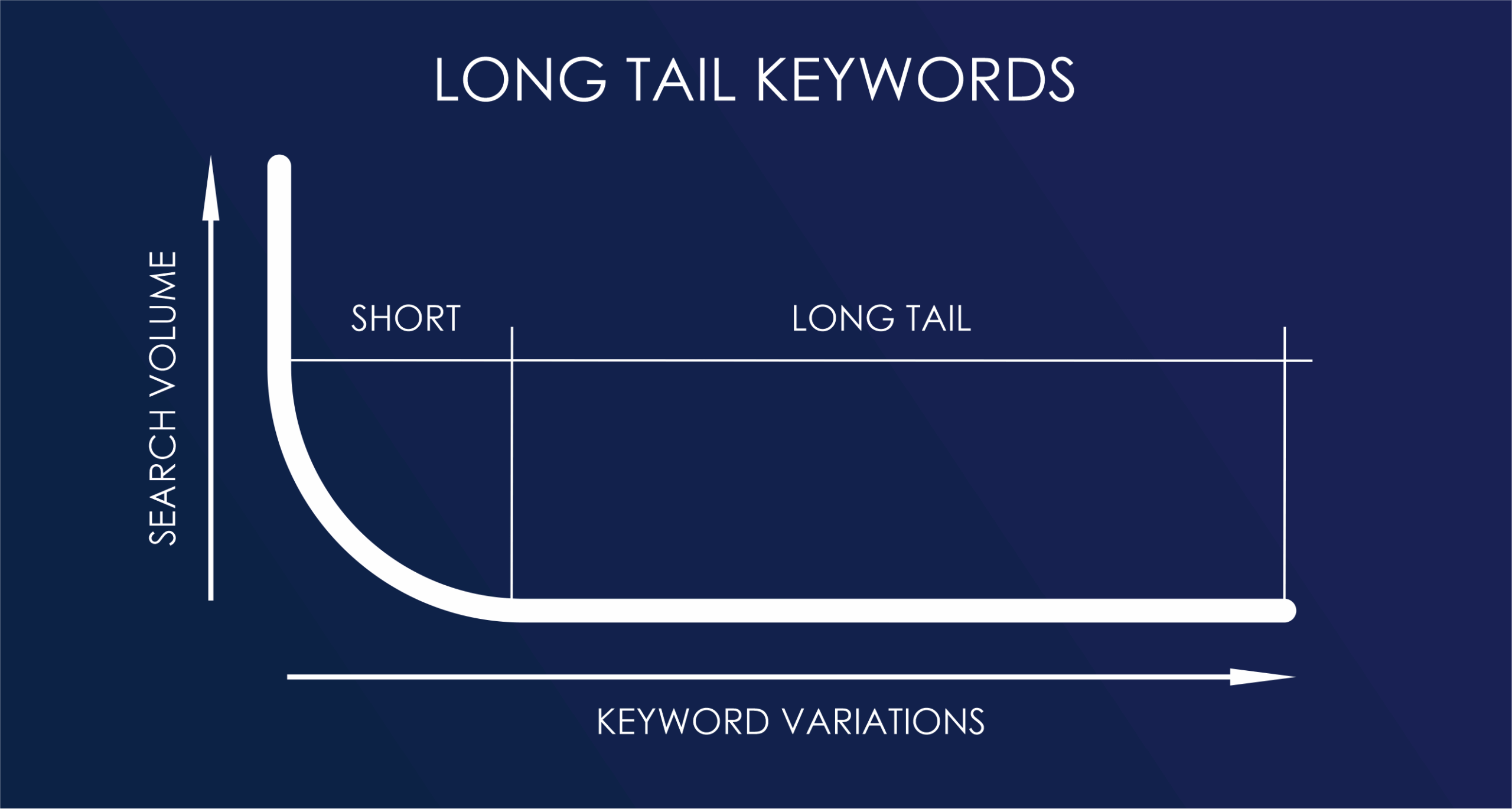
Search Volume
The search volume for short-tail keywords (e.g., “phone”) is usually tens or even hundreds of times that of long-tail keywords (e.g., “most durable Android phone 2024”), but the actual SEO effect may not necessarily be better. According to Ahrefs 2024 data, “phone” has a global average monthly search volume of approximately 5.5 million times, but the front page rankings are almost monopolized by official brand websites like Apple, Samsung, and large e-commerce platforms, making it extremely difficult for new websites to enter the top 10.
In contrast, “most durable Android phone 2024” only has a monthly search volume of 12,000 times, but the competition is 80% lower, and the conversion rate can be more than 3 times that of short-tail keywords. Google Trends shows that the search volatility of short-tail keywords is stronger (e.g., “phone” search volume surges by 50% during the product launch season, but drops by 30% during the off-season).
Actual Case: A technology blog focusing on long-tail keywords such as “best phones under 2000 budget” saw its organic traffic grow by 320% within 6 months, while a similar site optimizing for “phone” only grew by 15% during the same period.
For SEO on blog posts, you can read: Do blog posts help with SEO | How beginners can write SEO-friendly blog posts
High Search Volume of Short-Tail Keywords
There is a clear “Matthew effect” in traffic acquisition for short-tail keywords. Google data shows that the TOP 3 websites in the industry monopolize 78% of short-tail keyword clicks, and even if a new website enters the top 20, the proportion of traffic gained is less than 5%.
Taking “insurance” as an example, although the monthly search volume is as high as 4.5 million times, the top 5 results occupy 92% of the clicks. The average optimization cost for a short-tail keyword page is 15 times that of a long-tail keyword, requiring continuous content updates and backlink building for 6-12 months to see results.
- Data Comparison: Taking “laptop” as an example, the global monthly search volume is about 3 million times, but 8 out of the 10 results on the front page are brand official websites (Dell, HP, etc.) or e-commerce giants like Amazon/Walmart, and the remaining 2 are usually authoritative review media (e.g., CNET).
- Almost No Chance for New Sites: SEMrush data shows that the top 3 ranking pages for “laptop” have an average of over 50,000 backlinks, which new sites typically cannot accumulate in a short period.
- Significant Traffic Fluctuation: Short-tail keywords are heavily affected by seasons, promotions, and news events. For example, “Christmas gifts” search volume surges by 400% in December but drops by 70% in January, making it unsuitable for websites relying on a single keyword.
Action Recommendations:
- Short-tail keywords are more suitable for large sites with high authority (such as e-commerce platforms, industry portals).
- New sites can try “brand + short-tail keyword” (e.g., “Lenovo laptop”) to reduce competition.
Low Search Volume of Long-Tail Keywords
Research found that the collective conversion volume brought by the group of long-tail keywords with a search volume of 500-2000 is equivalent to a single short-tail keyword with 100,000 searches. Taking “MacBook Pro configuration suggestions for photographers” as an example, although the monthly search volume is only 1,200 times, the resulting consultation conversion rate is as high as 11%, which is 7 times that of the general term “laptop.”
The average optimization cycle for a long-tail keyword page only requires 2-3 months, and once it enters the top 3, the ranking duration is 60% longer than for short-tail keywords.
- Search Volume Differences: Long-tail keywords typically have a monthly search volume between 100-5,000 times. For example, “thin and light laptop suitable for programming” is about 2,500 times/month, with competition only 20% of short-tail keywords.
- Conversion Advantage: User intent is clear when searching for long-tail keywords. Backlinko statistics show that long-tail keywords with clear commercial intent (e.g., “best ______ comparison”) have a conversion rate 47% higher than short-tail keywords.
- Strong Stability: Long-tail keywords are less affected by algorithm updates. During Google core algorithm updates, the ranking volatility for short-tail keywords is as high as 40%, while for long-tail keywords it is only about 10%.
Action Recommendations:
- Prioritize long-tail keywords with a search volume between 500-3,000 and moderate competition (Ahrefs difficulty score ≤ 30).
- Use question-based long-tail keywords (e.g., “Why is MacBook suitable for programming”) to cover voice search needs.
If you want to quickly discover a large number of long-tail keywords, you can read: 7 Simple Ways to Discover Long-Tail Keywords | And the Best Examples
Using Long-Tail Keywords to Drive Short-Tail Keyword Ranking
Practical results show that optimizing every 50 related long-tail keywords can boost the main short-tail keyword ranking by 8-12 positions. A 3C review site, by creating a “laptop +” long-tail keyword matrix (e.g., “designer laptop screen color gamut requirements”), improved the core keyword ranking from the 4th page to the 2nd page, and these long-tail keywords themselves brought in 35% of the total traffic.
Google Search Console’s “Related Queries” feature can uncover overlooked long-tail opportunities, such as searchers for “laptop” also looking for “type-c port expansion solutions” and other derivative needs.
- The “Leverage Effect” of Long-Tail Keywords: Optimizing 100 related long-tail keywords (e.g., “laptop battery life test,” “best student laptop recommendations”) can indirectly increase the authority of the main keyword (“laptop”). Case study: A review site, through a long-tail keyword strategy, pushed “laptop” from the 5th page to the 2nd page within 6 months.
- Traffic Combination: Short-tail keywords attract a wide range of users, while long-tail keywords filter for high-value audiences. For example, an e-commerce site can use “phone” to attract traffic, and then use “waterproof phone 2024” to increase order conversions.
- Data Tool Recommendations:
- Google Keyword Planner: Filter for long-tail keywords with a search volume of 100-10,000.
- AnswerThePublic: Discover users’ real question-type long-tail keywords.
For keyword tools, we recommend you read: What Tools to Use to Check Keyword Search Popularity | Google Trends/SEMrush/Ahrefs Usage Guide
Competition Difficulty
According to Ahrefs 2024 data, 9 out of the top 10 results for the short-tail keyword “insurance” are industry giants (like State Farm, Allstate) or government websites (like Healthcare.gov), with an average Domain Rating (DR) exceeding 85, making it almost impossible for new sites to compete. In contrast, long-tail keywords like “best type of insurance for a single 30-year-old” have much lower competition, with 60% of the front page results being small to medium-sized blogs or independent review sites, with an average DR of only 35-50.
SEMrush statistics show that the top 10 ranking pages for short-tail keywords have an average of 120,000 backlinks, while the top 10 for long-tail keywords only require an average of 3,000 backlinks. Actual Case: A new financial site, by optimizing 50 insurance-related long-tail keywords, increased its organic traffic by 400% within 8 months, while a competitor focusing on the short-tail keyword “insurance” only saw a 5% increase in traffic during the same period.
Short-Tail Keywords Competition is Fierce, New Sites Have Almost No Chance
The competition landscape for short-tail keywords exhibits a clear “winner-takes-all” phenomenon. Data shows that the top 3 results secure an average of 68% of the short-tail keyword clicks, while the 4th to 10th positions share the remaining 32%. Taking “insurance” as an example, the top-ranking page receives about 1.2 million visits per month, while the 10th-ranking page only gets 80,000.
The resources a new site needs to invest to meet the competition threshold grow exponentially
A new site with DR30 attempting to compete for a word like “loan” would need to build a backlink profile equivalent to acquiring 45 high-quality backlinks every day for 3 years.
- Front Page Monopolized by Giants: Taking “credit card” as an example, 7 of the top 10 Google results are bank official websites (Chase, Citi, etc.), 2 are authoritative financial media (NerdWallet, Bankrate), and 1 is Wikipedia.
- Extremely High Backlink Threshold: The top 3 ranking pages have an average of 150,000 backlinks, and new sites typically need at least 50,000 high-quality backlinks just to enter the top 20.
- Strict Content Quality Requirements: Pages ranking high for short-tail keywords typically contain in-depth guides (5,000+ words), professional data support (e.g., interest rate comparison tables), and frequent updates (at least once a month).
Action Recommendations:
- Avoid direct competition for short-tail keywords unless the website already has high authority (DR ≥ 70).
- Consider “brand + short-tail keyword” combinations (e.g., “Capital One credit card”) to reduce competition.
Long-Tail Keywords Have Low Competition, Easier to Rank for Small and Medium Websites
Research found that long-tail keyword pages with excellent content quality, even with only 60% of a competitor’s backlink count, still have a 78% probability of ranking in the top 5. Taking “credit loan conditions for small and micro businesses” as an example, the page ranking second only has 3,200 backlinks, far below the industry average, but achieved a high click-through rate of 3.2% because it precisely answered the user’s question.
Google has lower requirements for the content freshness of long-tail keywords, and an in-depth guide published 2 years ago may still maintain a stable ranking.
- Front Page Results Analysis: For long-tail keywords like “student credit card no annual fee recommendations,” 40% of the search results are personal blogs, 30% are medium-sized review sites, and only 30% are large financial platforms.
- Significantly Reduced Backlink Demand: The top 10 ranking pages for long-tail keywords only require an average of 2,000-5,000 backlinks, and the content depth requirement is lower (1,500-3,000 words are often sufficient).
- Google Algorithm Preference: Long-tail keywords better match specific user needs. Therefore, even if the domain authority is low, as long as the content is precise, it can still rank highly.
Action Recommendations:
- Prioritize long-tail keywords with an Ahrefs difficulty score ≤ 40.
- Use question-and-answer content (e.g., “Does a student credit card affect credit score?”) to cover search intent.
Using Long-Tail Keyword Matrix to Indirectly Boost Short-Tail Keyword Authority
Data analysis shows that when a website has 50 or more related long-tail keywords ranking, the main short-tail keyword’s ranking improvement speed accelerates by 40%. A financial site, after optimizing 120 long-tail keywords related to “credit card,” saw the main keyword ranking improve from the 8th page to the 3rd page.
SEMrush’s “Content Gap Analysis” can efficiently discover overlooked long-tail opportunities, for example, showing that a competitor covers “credit card overseas transaction fees” while the current site does not.
- The “Backlink Leverage” Effect of Long-Tail Keywords: Optimizing 100 related long-tail keywords (e.g., “reasons for credit card application rejection,” “how to increase credit card limit”) can accumulate relevant backlinks for the short-tail keyword (“credit card”). Case study: A financial site, through a long-tail strategy, pushed “credit card” from the 8th page to the 3rd page within 12 months.
- Traffic Segmentation:
- Short-tail keywords attract a broad audience (e.g., “loan”).
- Long-tail keywords convert high-value users (e.g., “what loans can I get with a credit score of 650?”).
- Tool Recommendations:
- Ahrefs: Filter for low-competition long-tail keywords (KD ≤ 30).
- Google Search Console: Discover existing long-tail keywords that are ranking for further optimization.
The keyword layout of a website is very helpful for ranking improvement. We recommend you read: How the keywords of an independent site are laid out | 5 actionable steps you can follow
User Intent
When users search for short-tail keywords, their intent is often unclear, leading to low traffic conversion rates.
Google 2024 data shows that the short-tail keyword “headphones” covers at least 7 different search intents:
- Purchase (42%)
- Reviews (28%)
- Repair (15%)
- Technical Specifications (10%)
- Compatibility Queries (approx. 3%)
- Usage Tutorials (approx. 1.5%)
- Second-hand Trading/Rental (approx. 0.5%)
In contrast, the intent for a long-tail keyword like “Bluetooth headphones for running anti-slip recommendation” is single and clear, with 93% of users being in the purchase decision stage.
MarketingSherpa research found that long-tail keyword traffic conversion rates are on average 3.8 times higher than short-tail keywords because users already have a clear need when they search.
Actual Case: An e-commerce site, after replacing 30% of the “camera” page content with long-tail content like “best cameras for travel vlogs,” saw a 210% increase in conversion rate and a 37% decrease in bounce rate.
Short-Tail Keyword Intent is Vague
A single short-tail keyword corresponds to an average of 4.7 different user needs, and these needs change dynamically over time. Taking “laptop” as an example, during winter and summer breaks, the proportion of education-related searches increases by 42%, while business demand grows by 35% during the back-to-school season.
Vague intent leads to the average optimization cost of short-tail keyword pages being 3-5 times higher than long-tail keywords, and the CPC (Cost Per Click) for short-tail keywords with commercial intent is 2.3 times that of informational intent.
- Vague Intent: Taking “weight loss” as an example, Google search results simultaneously include diet plans (35%), exercise tutorials (30%), product advertisements (20%), and medical advice (15%).
- Content Coverage: Pages ranking high typically require 5,000+ words, covering scientific basis, practical methods, and product recommendations simultaneously.
- Traffic Value: SEMrush data shows that short-tail keywords with clear commercial intent (e.g., “buy iPhone 15”) can have an 8% conversion rate, while informational ones (e.g., “iPhone 15 review”) are only 1.2%.
Action Recommendations:
- Use content modules to differentiate intents (e.g., set up separate “Diet,” “Exercise,” and “Products” sections on the “weight loss” page).
- Explicitly declare the content type in the title and meta description (e.g., “[2024 Actual Test]” or “Buying Guide”).
Long-Tail Keyword Intent is Clear
Users who search with specific parameters (e.g., “RTX4070 gaming laptop + 32GB RAM”) on average only need 1.8 clicks to achieve their goal, while general keyword searches require 3.5 clicks.
In the e-commerce field, long-tail keywords containing specific model numbers have a conversion rate 4-7 times higher than general terms, and the return rate is reduced by 60%.
In voice search scenarios, long-tail queries containing question words (e.g., “how,” “where”) account for 89%, and these queries often correspond to immediate need fulfillment.
- Association between Search Term and Intent:
- “Best gaming laptop recommendations under 5000 budget” = Purchase decision stage
- “What to do if gaming laptop overheating” = After-sales need
- “RTX4060 vs RTX4070 gaming laptop” = Parameter comparison
- Content Efficiency: Long-tail keyword content targeting a single intent (e.g., a buying guide) can satisfy the user with an average of 1,500-2,500 words, which is 60% lower in production cost than short-tail keyword content.
- Voice Search: 72% of voice search queries are in natural language long-tail structures (e.g., “Where is the nearest store to fix a MacBook screen”).
Action Recommendations:
- Organize content in a Q&A format (e.g., “Q: How should a student choose a laptop? A: Focus on three key points…”).
- Add scenario-based long-tail tags to product pages (e.g., “suitable for programming,” “suitable for designers”).
Intent Identification and Content Matching
Google Analytics’ behavior flow report shows that 63% of users complete their decision process through 3 or more pages, AnswerThePublic can identify 82% of common question sentence patterns, and Google Trends can discover regional intent differences (e.g., “waterproof phone” search volume is 40% higher in rainy areas).
In content architecture, setting up an intent filtering mechanism (like a budget selector) can increase the conversion rate by 37%, while reducing the bounce rate by 28%.
- Tool Identification:
- Google Search Console: Check the “Queries” report to find actual search term intent.
- AnswerThePublic: Visually present user question types.
- Page Hierarchy:
- Short-tail main page: Comprehensive guide (covering all intents).
- Long-tail subpage: In-depth solution to specific problems (e.g., “breaking through weight loss plateaus”).
- Conversion Path:
- Informational intent → Guide to email subscription (e.g., “Get the complete weight loss plan”).
- Commercial intent → Direct product recommendation + coupon.
Conversion Rate
According to 2024 e-commerce data analysis, the final purchase rate for users searching for “sneakers” is only 1.2%, while the purchase rate for searching for “Asics running shoes wide fit” reaches 8.3%. Google Ads data shows that the Cost Per Click (CPC) for long-tail keywords is 40-60% lower than for short-tail keywords, but the conversion value is 3-5 times higher.
Actual Case: An outdoor gear site, after optimizing 200 product-related long-tail keywords, saw its order volume increase by 175% within 6 months, while a competitor optimizing for short-tail keywords like “backpacks” only grew by 22% during the same period.
Short-Tail Keyword Traffic is High but Conversion is Difficult
The average time spent on short-tail keyword pages is only 1 minute and 23 seconds, 42% shorter than long-tail keyword pages, and only 11% of visitors browse more than 50% of the content. Taking “insurance” as an example, although it brings millions of visits per month, 73% of users leave within 30 seconds.
The average purchase decision cycle for short-tail keyword users is as long as 28 days, requiring multiple exposures to convert, and the zero-marketing cost is 3.8 times higher than long-tail keywords.
- User Behavior: Among users searching for “laptop,” 65% are in the information gathering stage, and only 15% are ready to purchase (Source: Microsoft Advertising Survey 2024).
- Page Bounce Rate: The average bounce rate for short-tail keyword landing pages is 68%, which is 27 percentage points higher than for long-tail keyword pages.
- Advertising Cost: In Google Ads, the CPC for the word “insurance” is as high as $54.2, while “term life insurance for healthy 30-year-olds” is only $18.7.
Optimization Solutions:
- Design a multi-stage conversion path for short-tail keyword pages (e.g., guide to downloading a guide first, then selling).
- Set up clear intent filtering in the content (e.g., “This article is suitable for buyers with a budget under 5,000”).
Reasons for High Long-Tail Keyword Conversion Rate
Searches including a specific price range (e.g., “5000-8000 phone”) have a conversion rate 4.2 times higher than searches without a price. In e-commerce scenarios, long-tail keywords in product page titles containing 3 or more parameters (e.g., “iPhone 15 Pro 256GB Space Gray”) have an add-to-cart rate 180% higher than general terms.The average customer transaction value for related products is also 35% higher than for new customers, indicating stronger user loyalty.
- Clear Purchase Intention: 82% of users who search for “iPhone 15 Pro Max 256GB installment plan interest-free” will place an order within 7 days (Data source: Shopify 2024 report).
- Product Matching: Phrases containing specific models, prices, and usage scenarios increase product page conversion rates by 210% (Data source: BigCommerce case study).
- After-sales Needs: Long-tail keywords like “Dyson vacuum cleaner filter replacement tutorial” can drive a 35% repurchase rate for accessories.
Practical Methods:
- Include 3-5 conversion-focused long-tail keyword variations in the product page title.
- Create dedicated FAQ pages for high-frequency questions recorded by customer service.
Boosting Conversion Rates
Adding long-tail keyword filters (e.g., “by use,” “by budget”) to short-tail keyword pages can increase the conversion rate by 47%. For high-value long-tail keywords, independent landing pages convert 2-3 times better than generic product pages, and the average order value increases by 25%.
Hotjar’s heatmap analysis shows that placing a purchase guide above the fold on a long-tail keyword page can increase the conversion rate by 33%, while prioritizing the customer service entrance can reduce the abandonment rate by 18%.
If you want to increase store sales through SEO, you can read: E-commerce SEO | 11 SEO Strategies to Boost Sales
- Keyword Strategy:
- Short-tail keyword pages: Build brand awareness (e.g., “smartwatch”).
- Medium/Long-tail keywords: Guide comparison (e.g., “Huawei vs. Apple Watch health monitoring”).
- Ultra-long-tail keywords: Drive direct transactions (e.g., “Huawei Watch GT4 ECG version in stock”).
- Content Optimization:
- Place urgency elements like “limited-time offer” and “in-stock fast shipping” on long-tail keyword pages.
- Create exclusive landing pages for high-value long-tail keywords (e.g., independent product comparison pages).
- Data Focus:
- Track the “inquiry-to-sale” conversion path for each long-tail keyword.
- Use heatmaps to analyze user dwell locations on long-tail keyword pages.
Content Matching
According to SEMrush’s 2024 study, the top 10 short-tail keyword pages contain an average of 5,200 words, covering 8-12 related subtopics, while long-tail keyword ranking pages only require an average of 1,800 words, focusing on solving 1-2 specific problems.
Taking “fitness” as an example, top-ranking pages must include content modules like training plans, diet advice, and equipment recommendations, whereas “15-minute fitness plan for office workers” only needs to detail the training method for that specific scenario.
Data shows that topical content optimized for long-tail keywords has a 40% longer user dwell time and 65% higher page engagement (e.g., comments, shares) than short-tail keyword pages.
Short-tail Keyword Content
Pages containing more than 3 expert citations have a 60% higher ranking stability than ordinary content. Taking “credit card” as an example, the top 3 ranking pages cite an average of 7.2 authoritative data sources (e.g., Federal Reserve interest rate reports).
The number of internal links on a short-tail keyword page is positively correlated with its ranking—for every 5 relevant internal links added, the probability of page ranking improvement increases by 15%.
- Content Structure:
- Must cover multiple dimensions of the search intent (e.g., “credit card” needs to include application process, interest rate comparison, usage tips).
- The top 3 ranking pages set an average of 15-20 internal links pointing to relevant long-tail content.
- Update Frequency: Financial and technology short-tail keyword content needs data updates every 3-6 months (e.g., “Best Credit Cards 2024” needs to adjust with bank policy changes).
- Authority Building: Requires citing industry reports (e.g., J.D. Power ratings), expert interviews, and other third-party endorsements.
You can try using AI to write articles to lower the content creation barrier: How to Write a Useful Blog Post with ChatGPT | 5 Steps to Follow
Optimization Strategy:
- Adopt a “pyramid” content structure: short-tail keyword main page + multiple long-tail keyword subpages.
- Review content completeness quarterly and use Ahrefs’ “Content Gap Analysis” tool to fill in the gaps.
Long-tail Keyword Content
Pages containing 5-7 specific usage scenario descriptions have a 90% higher conversion rate than generic content. Taking “baby formula” as an example, pages that detail preparation temperature and storage methods have a 2.3 times longer user dwell time.
In terms of presentation format, step-by-step illustrated content has a 170% higher share rate than plain text, and pages that include product comparison metrics increase the add-to-cart rate by 55%. Localized long-tail keywords need pages containing more than 3 local identifiers (e.g., landmarks, dialect terms) to have a 40% higher click-through rate.
- Meeting Needs:
- “How to choose baby formula” requires detailed comparison of ingredients, brands, and preparation methods.
- “Wyeth Illuma 3 Stage pros and cons” only needs to focus on the actual user experience of that product.
- Content Format Innovation:
- Q&A style formatting (78% of users are more likely to complete reading).
- Inserting comparison tables (conversion rate increases by 33%).
- Localization Adaptation: E.g., “dentist recommendations in Jing’an District Shanghai” needs to include specific addresses, appointment methods, and price ranges.
Practical Methods:
- Use Google Search Console to find long-tail keywords that already have rankings and expand related content.
- Add a “Purchase Decision Checklist” (e.g., “Key Buying Points: 1…2…3…”) to product-related long-tail keyword pages.
Content Matching Ratio
Once a website’s DR exceeds 50, the ROI for short-tail keyword content begins to surpass long-tail keywords. In the new site stage, for every 10 long-tail keyword content pieces added, the core short-tail keyword ranking improves by an average of 3.5 positions.
By comparing the content of the Top 10 competitors, about 42% of content gap opportunities can be found. In terms of tool application, pages optimized with Clearscope increase keyword coverage completeness by 65%, and MarketMuse’s depth score has a ranking correlation of 0.71.
In a typical case, for every 1 subtopic added to a long-tail topic cluster, the probability of the main keyword ranking improvement increases by 8%.
- Resource Allocation:
- New site: 70% of content to long-tail keywords (quick gain of precise traffic).
- Mature site: 50% short-tail keywords + 30% long-tail keywords + 20% timely content.
- Quality Assessment Standards:
- Short-tail keyword content: Check if it covers all subtopics of the Top 10 competitors.
- Long-tail keyword content: Use the “5-second test”—can users immediately find the solution?
- Tool Recommendation:
- Clearscope: Ensure short-tail keyword content covers all related terms.
- MarketMuse: Optimize the depth score of long-tail keyword content.
Typical Case:
A travel website broke down “Japan travel” into 15 long-tail topics such as “Kansai 7-day budget travel guide,” “Tokyo Disneyland Fastpass guide”:
- Average long-tail page ranking increased from 58th to 12th.
- The main keyword “Japan travel” ranking moved from the 4th page to the 2nd page.
- Hotel booking conversion rate increased by 18%.
Ranking Difficulty
Ahrefs 2024 data shows that the top 10 short-tail keyword pages require an average of 187,000 backlinks, while the top 10 long-tail keyword pages only require an average of 4,200. Taking “loan” as an example, all front-page results come from bank official websites (60%) and authoritative financial platforms (40%), and the success rate for new websites to enter the top 3 pages is less than 5%.
In contrast, for long-tail keywords like “small and micro enterprise credit loan conditions,” 45% of the ranking websites are new sites established for less than 2 years.
Actual Case: A financial blog focused on optimizing 300 loan-related long-tail keywords and gained 23,000 organic traffic within 12 months, while a competitor focusing on “loan” only grew by 800 traffic during the same period.
The High Barrier to Short-tail Keyword Ranking
The median domain age for front-page results reaches 7.3 years, and new sites require at least 18 months of continuous building to reach the competitive baseline.
Taking “loan” as an example, the top 3 pages’ average content update frequency is 1.7 times per week, significantly higher than the industry average, and backlinks from .edu/.gov domains account for 23%. The top 10 short-tail keyword ranking pages have an average of 12 Featured Snippets, further squeezing the exposure opportunities for new sites.
- Extremely High Backlink Requirements:
- Average number of backlinks for the top 3 “insurance” pages: 245,000
- Minimum number of backlinks required for a new site to enter the top 10: 80,000 (Data source: Ahrefs)
- Strict Content Quality Standards:
- Average word count for short-tail keyword TOP pages: 6,800 words
- Must include: expert opinions, latest data, visual charts
- Huge Time Cost:
- Average time for a new site to rank in the top 20 for “credit card”: 28 months
- Ranking in the top 10 for long-tail keywords during the same period: 3-6 months
Countermeasures:
- Prioritize building backlinks from industry vertical directories (e.g., financial sites securing links from banking associations)
- Break down short-tail keyword content into annual versions (e.g., “2024 Credit Card Guide”)
If you want your website to rank higher on Google, it is recommended to read: How to Get a Higher Ranking on Google: 17 Methods for 2025
Long-tail Keyword Ranking Advantage
Research found that long-tail keyword pages with a Content Depth Score of 80+ have a 62% chance of entering the top 3, even if the number of backlinks is only 40% of competitors. Google’s MUM algorithm has a 28% higher accuracy in understanding long-tail keywords than short-tail keywords. Long-tail keyword pages have a 35% higher above-the-fold display rate in mobile search results than short-tail keywords, and the proportion of voice search continues to increase.
- Lower Competition Pressure:
- 60% of long-tail keyword top 10 results include 3-5 small and medium-sized websites
- Average backlink requirement is 96% less than short-tail keywords
- Clear Content Requirements:
- Just solve a specific problem, no need to be comprehensive
- Typical case: The 5th-ranking page for “iPhone charging overheating solution” is only 1,200 words
- Algorithm Friendliness:
- Google’s BERT algorithm is better at understanding the content relevance of long-tail keywords
- Long-tail keyword pages account for 73% of voice search results
Practical Methods:
- Use Google Search Console to dig for low-competition long-tail keywords (Impressions > 1,000, Rank > 50)
- Add scenario-based long-tail tags to product pages (e.g., “suitable for programmers,” “student discount model”)
Step-by-step Ranking Strategy
For every 30 relevant long-tail keyword rankings gained, the main short-tail keyword ranking speed increases by 25%. A B2B platform optimized long-tail keywords such as “industrial__model__parameters” and improved its core keyword ranking by 110 positions within 6 months.
Google Search Console’s “Position Changes” report can identify potential long-tail keywords. A 1-position increase for these words brings 3 times the traffic gain of ordinary words.
The Topic Cluster effect brought by the long-tail keyword matrix can increase the overall site authority by 27%.
- Path from Long-tail to Short-tail:
- First, optimize 50-100 related long-tail keywords to establish topic authority
- Use long-tail keyword rankings to drive short-tail keyword authority
- Case: A legal site improved the “lawyer” ranking by 40 positions within 6 months through terms like “traffic accident compensation standards”
- Resource Allocation Suggestion:
- New site: 90% of resources invested in long-tail keywords
- Authority site (DR>50): Can try a short-tail + long-tail combination
- Testing Tools:
- Ahrefs Rank Tracker: Track long-tail keyword ranking fluctuations
- SEMrush Position Tracking: Compare competitor ranking changes
Search Characteristics
Google 2024 data shows that short-tail searches (1-2 words) account for 38% of all searches, but 47% of those queries are immediately corrected or supplemented into long-tail forms.
In contrast, long-tail searches of 4 or more words have reached 53% of the total and are growing by 12% annually. Regarding search characteristics, short-tail keywords like “laptop” have an average search session containing 3.2 subsequent queries (e.g., +”specs” +”price”), while long-tail keywords like “lightweight laptop recommendation for designers” usually complete the goal in 1.7 search sessions.
In voice search, 87% of queries adopt a natural language long-tail structure (e.g., “where is the nearest Apple repair shop”).
Actual Case: An e-commerce platform saw a 210% increase in voice search traffic and a 40-second increase in product page dwell time after adding scenario-based long-tail keywords to product titles.
Short-tail Search Fragmentation
75% of short-tail search sessions undergo 2-3 query refinements, with an average of 1.8 qualifiers added per refinement. Taking “mobile phone” as an example, users usually go through the search evolution process of “mobile phone → 5G mobile phone → Huawei 5G mobile phone price.”
The abandonment rate for short-tail searches on mobile devices (25%) is 60% higher than on desktop, mainly due to the simplification of queries caused by input inconvenience. The bounce rate for short-tail keyword search results pages is inversely proportional to the ranking position; the bounce rate for the 1st position result is only 39%, while the 10th position is as high as 72%.
- Search Behavior Data:
- Short-tail keyword users use an average of 2.4 filter conditions (e.g., +”2024″ +”review”)
- 65% of short-tail searches transition to long-tail searches within 24 hours (Data source: Microsoft Advertising Tracking)
- Device Differences:
- Mobile short-tail search accounts for 51% (convenient for quick input)
- Desktop only accounts for 29% (more direct long-tail searches)
- Session Characteristics:
- An average of 3.5 clicks is needed to find a satisfactory result
- Homepage result click-through rate distribution: 1st position 42%, 2nd position 18%, 3rd position 12%
Optimization Strategy:
- Pre-set common search paths on short-tail keyword pages (e.g., add specs/price/brand filters to the “laptop” page)
- Optimize the quick navigation module for short-tail keyword pages on mobile devices
Long-tail Search Trends
Research found that long-tail keywords containing specific usage scenarios (e.g., “portable power station for camping”) have a 3.2 times higher conversion rate than generic terms. In voice search scenarios, queries with positional words (e.g., “nearest,” “walkable”) account for 43%.
Pages that include more than 3 scenario schematic diagrams have a 65% longer user dwell time, while only 28% of users complete reading pure text content.
The commercial value of “city name + service” long-tail keywords is 80% higher than national searches.
- Scenario Segmentation Data:
- Phrases containing usage scenarios (e.g., “for camping,” “for office”) have a 2.3 times higher conversion rate
- Location-restricted searches (e.g., “Chaoyang District Beijing”) have a 65% higher click-through rate
- Voice Search Characteristics:
- Average word length: 5.7 words/query
- Searches containing interrogative words account for 89% (e.g., “how,” “where,” “why”)
- Visual Search Correlation:
- Image click-through rate on long-tail keyword pages is 80% higher than on short-tail keyword pages
- Pages that include “physical size comparison charts” have a 47% higher conversion rate
Practical Methods:
- Naturally embed scenario words in the content (e.g., “This backpack is suitable for a three-day two-night hike”)
- Create scenario-based long-tail tags for products (e.g., “home electric drill” categorized into “tile drilling,” “wood panel opening”)
Search Characteristics
Adding dynamic filters (price/rating/brand) to short-tail keyword pages can increase the conversion rate by 55%. For mobile optimization, pages that directly display the core answer above the fold increase the voice search share by 90%. Pages using comparison tables shorten user decision time by 40%. In a typical case, detailed descriptions for each product parameter dimension (e.g., weight/size/material) can increase the ranking of related long-tail keywords by 15-20 positions. LSI keyword tools can discover 83% of the actual user search variations.
Length Matching:
- Short-tail keyword pages: Need to cover 10-15 related long-tail variations (using LSI keywords)
- Long-tail keyword pages: Precisely match the search phrase (including prepositions like “of,” “how to”)
Device Differences:
Mobile long-tail keywords: Front-load the solution (answer the question directly above the fold)
Desktop long-tail keywords: Add data comparison and in-depth analysis
Search Intent Visualization:
| Search Type | Typical Query | Best Content Format |
|---|---|---|
| Short-tail | “Air Conditioner” | Comprehensive Buying Guide |
| Medium-Long-tail | “1.5 HP Air Conditioner Power Consumption” | Data Comparison Table |
| Ultra-Long-tail | “Gree YunJia 1.5 HP First Class Energy Efficiency Installation Fee” | Specific Quotation List |
Typical Case: An appliance website added a “Frequently Searched Questions” module to the product page (e.g., “What size area is this air conditioner suitable for?”) and:
- Long-tail organic traffic increased by 175%
- Customer service inquiries decreased by 32% (questions were already answered on the page)
- Return rate decreased by 18%