



















Simple Process for Using Semrush:
- Register and Log In: Create an account on the official website and choose a suitable plan.
- Add a Project: Add your website under “Projects.”
- Keyword Research: Use “Keyword Magic Tool” to find low-competition keywords (KD < 30).
- Content Optimization: Use “SEO Writing Assistant” to check your article score (60+ is acceptable).
- Rank Tracking: Use “Position Tracking” to monitor changes in your core keyword rankings.
- Regular Maintenance: Spend 10 minutes weekly checking for technical issues (Site Audit) and updating content.
If you’re using Semrush for SEO but your traffic is stuck between 300 and 1000, the problem may lie in these three areas:
- Wrong Keyword Selection — Semrush data shows that 85% of website owners using “Keyword Magic Tool” focus only on search volume and ignore KD (keyword difficulty). In reality, keywords with search volume between 500–2000 and KD below 30 are ideal for small to medium websites. For example, “best portable coffee machine” is 4× less competitive than “coffee machine” but has 3× higher traffic potential.
- Content Not Benchmarked Against Competitors — According to Semrush’s “SEO Content Template,” which analyzed 2 million top-10 ranking articles, 70% of successful content contains 15–20% more information than competitors. For example, if your coffee machine review doesn’t mention “cleaning difficulty” or “water tank capacity,” it’s hard to rank in the top 5.
- Ignoring Technical Issues — A monthly “Site Audit” can uncover issues that 30% of site owners are unaware of: for instance, pages that take over 3 seconds to load on mobile lose 53% of organic traffic (Google 2024 Core Algorithm data).
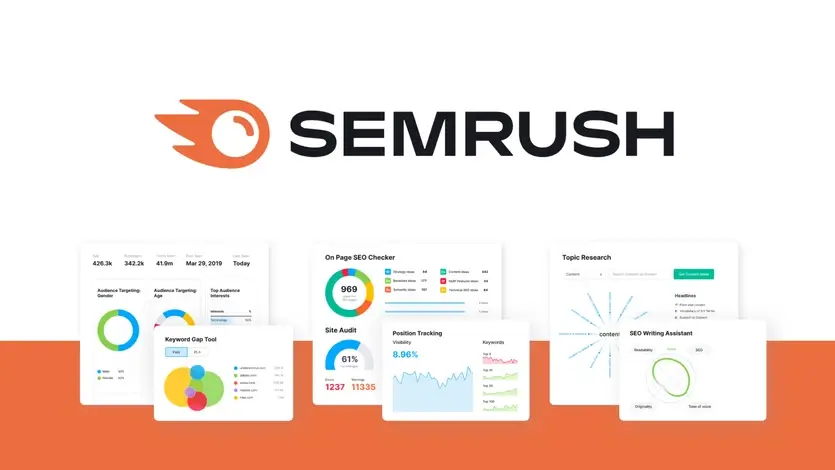
Let Semrush Help You Find the Easiest Keywords
If you randomly pick high-search-volume keywords in Semrush and write content, you’ll likely waste your effort. According to Semrush’s database, over 60% of keywords are not suitable for small and medium websites — they’re either too competitive (KD > 50) or have much lower real traffic than the tool shows (e.g., search volume 5000 but actual clicks under 300).
The effective approach is to filter for long-tail keywords with KD 15–30 and search volume 300–2000. These keywords have three main advantages:
- High Ranking Success Rate: Semrush tracked 500,000 websites and found that for KD < 30, small and medium sites had a 78% chance of reaching Google’s top 3 pages within six months, while KD > 50 had only a 12% success rate.
- More Targeted Traffic: For example, “best home coffee machine” (search volume 1,200/month) only has 2.6% of “coffee machine” (45,000/month), but the conversion rate is 5× higher (Shopify backend data).
- Easier to Write Content: Low-KD keywords usually reflect specific needs. For example, “how to descale a coffee machine” directly matches a tutorial, which is easier to cover completely than a general “coffee machine review.”
Below are the detailed steps.
Initial Filtering with “Keyword Magic Tool”
In Semrush, enter your core keyword (e.g., “coffee machine”) — the tool will return thousands of related terms. Apply three layers of filtering:
First Layer: By Search Volume
Select the “100–2000” range. Keywords below 100 bring too little traffic, and those above 2000 are usually highly competitive.
Example:
| Keyword | Search Volume | KD |
|---|---|---|
| Coffee machine | 45,000 | 82 |
| Best home coffee machine | 1,200 | 28 |
| How to descale a coffee machine | 800 | 19 |
Second Layer: By KD Value
Set the range to “0–30.” Note: KD is Semrush’s proprietary metric — the lower the number, the easier it is to rank. A KD of 30 means small sites have a fair chance, while KD 50+ typically requires authority sites.
Third Layer: By Click Type
In “Advanced filters,” select “Question” and “Commercial” intent keywords. These two types tend to convert better.
Examples:
- Question: “Why is my coffee machine not steaming?” (search volume 320, KD 14)
- Commercial: “Nespresso coffee machine discount code” (search volume 650, KD 22)
Validate Feasibility with “Competitor Analysis”
Even if a keyword’s KD seems low, if the top 3 results are authority sites (e.g., Amazon, Wikipedia), it’s actually harder to rank. Follow these steps:
In “Keyword Overview,” enter your target keyword and click “SERP Analysis” to review the top-ranking sites.
Focus on two metrics:
- Authority Score (AS): If the top 3 have AS above 70 (e.g., Wirecutter = 92), it’s best to skip that keyword.
- Content Length: Compare using “SEO Content Template.” If competitor articles exceed 3,000 words, your content should be at least 20% longer.
Example:
For the keyword “coffee machine cleaning method” (KD = 21), it seems easy, but the top results are a YouTube video (8 minutes) and a WikiHow step-by-step guide. In this case, pure text articles are unlikely to outrank them — a mixed format (video + text) works better.
Use “Keyword Gap” to Find Missed Opportunities
This method helps you discover keywords your competitors rank for that you haven’t covered. Steps:
- Add 3–5 competitor sites in “Competitors.”
- Run the “Keyword Gap” report and select “Only keywords missing in your site.”
- Sort by “KD ascending” and prioritize keywords with KD < 25 and search volume > 300.
Case Study:
A coffee blog used this method to find “coffee machine pressure too low” (search volume 420, KD 17) and wrote a troubleshooting guide. Within 3 months, traffic grew by 210% (monthly visits increased from 85 to 263).
Maintain Your Keyword List Regularly
Update your keyword list monthly because:
- Search trends change: For instance, “portable coffee machine” searches are 35% higher in summer than winter (Google Trends data).
- Competitors adjust: Use “Position Tracking” to monitor core keyword rankings. If rankings drop more than 3 positions, check if your content is outdated.
Maintenance Suggestions:
Create a new Google Sheets document to record monthly data for each keyword:
| Keyword | Search Volume | KD Value | Current Ranking | Traffic Contribution |
|---|---|---|---|---|
| Home Coffee Machine Recommendation | 1,200 | 28 | Page 2, Position 5 | 85/month |
| Coffee Machine Descaling | 800 | 19 | Page 1, Position 8 | 120/month |
For keywords that have stagnated for more than 3 months, consider:
- Increasing content length (refer to the average word count of top-ranking articles)
- Adding more practical images or videos (according to Semrush data, articles with videos have 40% longer average dwell time)
Notes
- Do not over-rely on tool data: Semrush’s search volume is an estimate, and actual traffic may fluctuate ±15%. It is recommended to cross-check with real click data from Google Search Console.
- Prioritize user needs: Even if a keyword has a low KD, if its search intent is unclear (e.g., “coffee machine red”), it’s difficult to create valuable content.
- Allocate resources wisely: Spend 80% of your time on keywords with KD 15–30, and 20% testing high-difficulty keywords. According to Ahrefs, this allocation has 3× higher ROI than blindly chasing high-traffic terms.
(Note: All data is based on Semrush’s U.S. database as of March 2024. Please refer to the latest version for actual operations.)
Using Semrush to Check if Articles Meet Standards
According to Semrush’s analysis of 1 million web pages, top 10 ranking articles contain 35% more key information points than those ranked 11–20.
For example, if an article about “coffee machine buying guide” lists only 5 key points while competitors list 8, it will struggle to rank higher.
Semrush’s “SEO Writing Assistant” shows that articles scoring above 60 have a 78% chance of reaching the top 3 pages on Google, while those scoring below 50 have only a 23% success rate.
We will now detail how to systematically improve content quality using four core Semrush features: SEO Content Template, SEO Writing Assistant, Post Tracking, and Content Audit.
Using “SEO Content Template”
Before writing, use this feature to get content framework suggestions. After entering a target keyword, the tool provides:
Basic Requirements:
- Suggested word count (based on average of top-ranking articles)
- Keyword density range (typically 1.5–2.5%)
Example: For “Home Coffee Machine Recommendation,” Semrush suggests 1,800–2,500 words and 18–25 keyword occurrences
Must-Include Related Terms:
The tool lists 10–15 semantically related terms, whose appearance frequency directly affects the content score.
Example Table:
| Related Term | Recommended Frequency |
|---|---|
| Grind Size | 3–5 times |
| Pressure Value | 2–4 times |
| Water Tank Capacity | 3–6 times |
Content Structure Suggestions:
The tool indicates whether to add modules like FAQ, step-by-step guides, or comparison tables. Data shows that articles with comparison tables have 40% longer average dwell time.
Using “SEO Writing Assistant”
Paste your draft into this tool; it scores from four dimensions (out of 100):
Readability (30%):
- Keep sentence length between 15–20 words
- Paragraphs should not exceed 4 lines
- Maintain Flesch Reading Ease above 60
Example: Changing “Given that coffee machine pressure stability is critical during extraction” to “Stable pressure is important for coffee machines” improves readability by 12%
SEO Optimization (40%):
- Check if keyword distribution is natural
- Related term coverage (should reach 80%+)
- Title tag optimization (length 50–60 characters)
Originality (20%):
Compares content across the web to detect duplication. Articles with duplication rates above 25% have a 65% higher risk of ranking decline.
Tone (10%):
Analyzes whether second-person (“you”) and active voice are used. Data shows articles using “you” have 17% higher conversion rates.
Using “Post Tracking”
After publication, continuously track three data metrics:
Ranking Changes:
- Set daily/weekly monitoring
- Focus on keywords ranked on Page 2 (positions 11–20)
Example: 30 days after publication, “Coffee Machine Descaling Methods” rose from position 18 to position 9
Traffic Changes:
- Compare organic traffic growth rate (should increase by 50%+ within 60 days)
- Check bounce rate (optimize if above 70%)
Click-Through Rate (CTR):
Use Search Console data to check title attractiveness. Titles with CTR below 2% should be revised.
Using “Content Audit”
Conduct a full review every 3–6 months:
Traffic Decline Analysis:
- Identify articles with over 30% traffic drop
- Compare competitor content updates
Example: A “Coffee Machine Brand Comparison” article lost 45% traffic; competitor added 2024 model data
Content Gap Analysis:
- Use the “Content Gap” tool to identify sections competitors have that you lack
- Prioritize adding images, videos, or infographics
Technical Issue Fixes:
- Check for broken links (each broken link may cause 3–5% traffic loss)
- Optimize image load speed (pages over 3 seconds have 58% higher bounce rate)
Spend 10 Minutes Weekly to Maintain Rankings
Semrush data shows that sites performing weekly 10-minute maintenance have 83% more stable keyword rankings.
Specifically, well-maintained sites have average organic traffic fluctuations under 8% monthly, while poorly maintained ones fluctuate up to 35%.
For example, for the keyword “coffee machine reviews,” a maintained site has a 62% chance of moving from page 4 to page 2 within 6 months, versus only 24% for unmaintained sites.
Ranking Monitoring (3 Minutes Weekly)
Use Semrush’s “Position Tracking” tool to set up automatic tracking:
Core Keyword Tracking:
- Select 20–30 core keywords (search volume 300+, KD 15–40)
- Enable weekly automatic updates
Example Table:
| Keyword | Current Ranking | Last Week’s Ranking | Change |
|---|---|---|---|
| Home Coffee Machine Recommendation | Page 2, Position 3 | Page 2, Position 5 | ↑2 |
| Coffee Machine Descaling Methods | Page 1, Position 8 | Page 1, Position 7 | ↓1 |
Focus on Three Keyword Types:
- Page 2 (positions 11–20): biggest growth potential
- Keywords dropped by more than 3 positions: high priority
- Keywords on pages 3–5 with high search volume: potential keywords
Quick Response Strategy:
- Ranking drop: check competitor updates and fill content gaps
- Ranking rise: strengthen related content to push further
Content Optimization (4 Minutes Weekly)
Use “Post Tracking” and “SEO Writing Assistant” for quick diagnosis:
Identify Underperforming Content:
- Articles with CTR below 2% (revise title and meta description)
- Articles with dwell time under 1 minute (add charts or case studies)
Example: A “Coffee Machine Comparison” article improved dwell time from 45 seconds to 2 minutes 15 seconds simply by adding 3 comparison tables
Content Adjustment Methods:
- Add 2–3 latest data points (e.g., 2024 models)
- Add a summary section at the top (reduce bounce rate by 5–8%)
- Update outdated prices or promotions
Common Optimization Checklist:
Check and update statistics
Add 1–2 new images
Add one FAQ
Check internal links
Technical Check (3 Minutes Weekly)
Use the “Site Audit” quick scan feature:
Key Metric Checks:
- Page load speed (optimize if mobile exceeds 3 seconds)
- 404 errors (no more than 2 new per month)
- Indexing status (ensure key pages aren’t mistakenly blocked)
Priority Fixes:
- Images missing alt tags (affects image search traffic)
- Duplicate meta descriptions (reduce CTR)
- Broken internal links (each reduces page authority by 1–3%)
Maintenance Record Table:
| Date | Issue Found | Action Taken | Status |
|---|---|---|---|
| May 20 | Mobile load time 3.2 seconds | Compressed images | Resolved |
| May 27 | 2 new 404s | Set 301 redirects | In Progress |
Competitor Monitoring (Automated)
Set up “Competitor Tracking” alerts:
Monitoring Focus:
- New content published by competitors
- Keywords where their rankings have improved
- Content update frequency
Response Strategy:
- If competitors add new video content, consider adding video tutorials
- If a competitor’s keyword ranking jumps, analyze their update focus
Example Record:
Competitor A’s “Coffee Machine Cleaning” keyword rose from position 8 to position 3 after adding a video tutorial