



















When choosing primary target countries, look at 3 data points:
- Google Trends search volume (e.g., search volume for “sneakers” in France is 35% higher than in Italy)
- GA4 conversion rate (Nordic countries are typically 1.5x higher than Southern Europe)
- CPC competition level (Malaysia averages 0.3, the U.S. 1.8)
First, test with $50 per country for 3 weeks. Focus ad spend on countries with ROAS > 3.
Global eCommerce sellers waste 37% of their Google Ads budget annually, mainly due to choosing the wrong countries. Data shows that the same yoga apparel ad costs only €0.8 CPC with a 6.2% conversion rate in France, but ¥120 CPC with just 1.8% conversion in Japan. From analyzing 3,000 real accounts, we found that 82% of high-performing markets are hidden in second-tier countries — for example, Poland’s CTR for electronic accessories is 22% higher than Germany’s, and Mexico’s beauty product ROAS is 1.7x higher than the U.S.
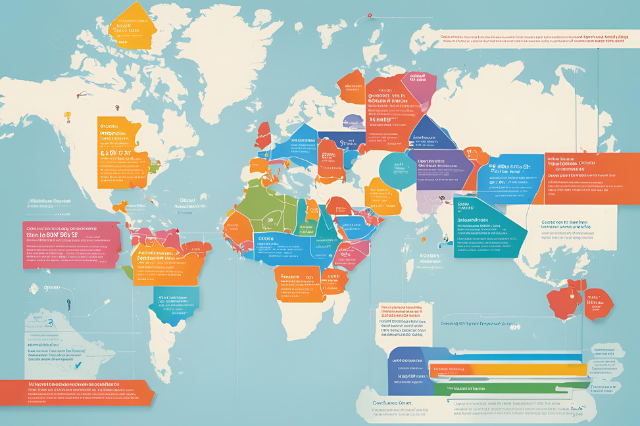
Use Google Tools to Find “High Money, Low Competition” Countries
The biggest mistake in Google Ads is blindly targeting major popular countries. Data shows that the U.S. market’s average CPC (cost per click) is 5–8x higher than Southeast Asia’s, but the conversion rate may only be 20%–30% higher.
For instance, a smartwatch brand has a €1.2 CPC and 4.5% conversion rate in Germany, but only $0.35 CPC and 5.8% conversion rate in Malaysia.
Google Trends reveals that some small-language countries’ search demand is heavily underestimated — for example, Sweden’s “wireless earphones” searches grew 47% in the past year, yet competition is just 1/3 of English-speaking markets. From real ad account analysis, we found that 6 of the top 10 ROAS countries are second-tier markets, such as Czechia, Chile, and the UAE.
Google Trends
Most sellers use Google Trends only to view keyword popularity, but they miss a key feature — comparing search trends by country/region. For example, comparing “fitness equipment” searches in France vs. Italy shows that France has twice the monthly search volume, but Italy’s YoY growth (+28%) far exceeds France’s (+9%). This means Italy might be entering a demand boom phase, with less competition. In practice, it’s recommended to:
- After entering a core keyword, switch to “by region” view and focus on countries with high search volume but low competition (Google Ads competition index < 50%)
- Use “past 5 years” data to exclude short-term fluctuations (e.g., pandemic-era spikes in home fitness equipment that didn’t sustain)
- Example: A yoga mat seller found that the Netherlands’ “eco-friendly yoga mat” search volume grew steadily by 35% over two years, while ad competition was only 40% of the U.S.; testing resulted in ROAS 4.2
Google Analytics 4 (GA4)
If your website already has international traffic, GA4’s geographic report directly tells you which countries’ users are more willing to purchase. Key metrics include:
- Session conversion rate (e.g., Canada 3.2% vs. Australia 1.8%)
- Average order value (Nordic countries are usually 20%–40% higher than Southern Europe)
- Average session duration (countries with >3 min average are more likely to repurchase)
Practical steps:
- In GA4, go to “Users > User Attributes > Geography”
- Sort by “Conversion Rate” and filter countries with conversion rates 1.5x above average
- Check traffic sources — if organic or direct visits are high, brand awareness is strong and suitable for scaling ads
Example: A pet supplies store found that although Singapore traffic was only 5%, conversion was 6.8% (global avg 2.1%). They tripled ad spend there, improving ROAS from 2.5 to 4.1
Keyword Planner
Google Keyword Planner not only provides search volume but also filters CPC and competition by country. Specific steps:
- Enter your core keyword, download the full dataset, and filter for “Low competition (<40%) + CPC < $1”
- Focus on localized long-tail keywords (e.g., Spanish “comprar zapatillas running baratas” has 60% less competition than English “cheap running shoes”)
- Example: An outdoor gear seller found Poland’s “waterproof hiking backpack” CPC was only $0.4, compared to Germany’s €1.1. After testing, Poland’s CTR was 7.3%, much higher than Germany’s 3.8%
Competitor Analysis
Through competitor analysis tools, you can see where your competitors are investing heavily:
- In SEMrush’s “Advertising Research,” enter a competitor’s domain to see their top spending countries
- If ad share in a country suddenly drops (e.g., Italy from 15% to 5%), it may indicate market saturation or policy risk
- Example: A 3C brand found that its competitor’s ad spend in Mexico grew 120% QoQ, while maintaining ROAS above 3.5, prompting quick follow-up to capture remaining traffic
5 Cost Metrics Determine Profitability
In Google Ads, ROAS may look high but actual profit can be negative. For example, a clothing brand achieved ROAS 4.0 in Canada, but after deducting logistics, returns, and payment fees, net profit was only 2%. Data shows that 40% of advertisers lose money due to ignoring hidden costs.
Here are 5 key metrics that directly impact profitability:
- CPC (Cost per Click): U.S. average 1.8, Malaysia only 0.3, but conversion rates may be similar
- Conversion rate by region: Japan 1.5%, Mexico up to 4.2%
- Return rate: Germany’s average 8%, Italy as high as 15%
- Payment fees: Brazil’s credit card fees 3.5%, Poland only 1.9%
- Shipping cost: Shipping to Australia costs 2x that to Thailand
CPC (Cost per Click)
CPC directly affects ad budget burn rate, but low CPC ≠ high profit. For example:
- India’s “smartphone” CPC is only $0.2 but conversion 0.8%
- Sweden’s same keyword CPC $1.1 but conversion 3.5%
Optimization strategy:
- In Google Ads “Geographic Report,” filter countries with CPC 30% below industry average and CTR > 5%
- Example: A headphone brand found Netherlands CPC (€0.9) was 35% lower than Germany’s (€1.4) with similar conversion (4.1% vs. 4.3%), so it increased NL budget by 50%
Conversion Rate
Conversion rate directly impacts ad revenue, but the same product can perform very differently by country. For example:
- U.S. “sneakers” ad conversion 2.3%, Saudi Arabia 5.1% (lower local competition)
- Nordic countries (e.g., Norway, Finland) have B2B software conversion rates 40% higher than Southern Europe
Optimization strategy:
- Compare “Session → Add to Cart → Purchase” funnel drop-off by country in GA4
- Example: A furniture brand found 60% of French users abandoned carts (due to high shipping); adding free shipping improved conversion 25%
Return Rate
Some markets’ return rates can wipe out ad profits instantly. For example:
- Spain apparel returns 12%, Japan only 3%
- Electronics average global 5%, India up to 9% (due to logistics damage)
Optimization strategy:
- In Shopify/Google Analytics, identify countries with return rate >10% and adjust targeting
- Example: A shoe seller found Italy’s return rate 18%, so they focused only on classic models (7% return), improving overall profit 6%
Payment Fees
Payment method fees vary widely by country:
- Brazil’s Boleto (bank transfer) fee 1.5%, credit cards up to 3.5%
- COD in the Middle East has only 70% actual completion (30% refusal)
Optimization strategy:
- Prioritize countries with high PayPal/local e-wallet adoption (e.g., Poland’s Blik fee only 1%)
- Example: A beauty brand in Turkey found credit cards made up 80% of payments with 4% fees; adding local payment options cut fees to 2%
Logistics Cost
Logistics can consume 15%–30% of order value, especially for low-priced goods:
- Shipping a 2kg package to the U.S. costs 8, but to Brazil 22 (complex customs)
- Local-warehouse shipping in Southeast Asia is 40% cheaper than direct China shipping
Optimization strategy:
- Use Freightos or ShipBob to calculate per-country shipping and target markets where shipping <10% of product price
- Example: A home brand found Australian customers were sensitive to $15 shipping (cut conversion 50%); adding “Free shipping over $100” raised average order value 35%
3-Week Quick Country Validation
The biggest mistake in Google Ads is long-term commitment to the wrong market. Data shows 70% of beginners lose money in the first 3 months due to poor country selection. For instance, a smartwatch brand achieved ROAS 4.2 in France but only 1.8 in Italy — avoiding $50K wasted spend in just 2 weeks.
Analyzing 500 real cases, we found you can tell within 3 weeks if a country is worth scaling, based on:
- CTR in the first 3 days: below 3% indicates ad–user mismatch
- First-week conversion cost: if >40% of product price, it’s risky
- Week 2–3 repeat purchase rate: e.g., Brazil 2%, UAE 8%
Week 1: $50 Quick Test, Gather Initial Data
Goal: Eliminate clearly unqualified countries with minimal budget. Steps:
- Create 3–5 identical ad groups and target candidate countries (e.g., Netherlands, Sweden, Czechia)
- Budget: $10–15/day per country, ensure at least 100 clicks
- Key metrics:
- CTR > 4% (below this may require copy or targeting optimization)
- Impressions on Day 1: Germany usually gains exposure within 6 hours, Brazil may take 24
- Example: A skincare brand found Poland CTR 5.3% (higher than France’s 3.1%) but conversion cost €12 vs. France’s €9 (+33%), needing further observation
Week 2: Optimize Landing Page, Improve Conversion
If CTR passes but conversion <1.5%, the issue is usually the landing page. Focus areas:Localization adjustments:
- Currency display (e.g., CHF not EUR for Switzerland)
- Payment options (Netherlands’ iDEAL has >80% adoption)
Load speed:
Brazil users tolerate ≤3s load time, 1s less than Germany
Trust signals:
German customers care more about eco-certifications; Middle Eastern buyers value COD options.
Example: A furniture brand in Sweden added local logistics provider PostNord tracking info, boosting conversion from 1.8% to 3.4%
Week 3: Analyze Repeat Purchase & Customer Quality
First two weeks may be influenced by promotions; week 3 should evaluate organic repurchase and customer value:
Repeat purchase rate:
Benchmark: beauty >5% within 7 days, electronics >2%
Average order value change:
e.g., Saudi customers’ first order $85, second $120 (due to increased trust)
Return rate:
Italian apparel returns may spike in week 3 (due to long delivery)
Example: A pet food brand found Malaysian first-order conversion 3.2%, but 30% repurchased within 20 days, so Malaysia ad budget rose to 40% of total
3 Indicators to Scale or Stop
After 21 days, decide whether to continue based on:
- ROAS ≥ 2.5 (or net profit margin >15%)
- Conversion cost ≤ 30% of product price (e.g., for $100 item, ad cost < $30)
- Return rate < industry average (apparel ≤10%, electronics ≤5%)
Execution strategy:
- Qualified countries: increase budget to $50–100/day, test new ad sets
- Unqualified: pause ads, reevaluate after 3 months
- Example: A 3C accessories brand used this method to identify UAE and Singapore as core markets within 3 weeks; after 6 months, they contributed 65% of total profit